
Why North Ridge backed real renders over AI for a 29 home subdivision
North Ridge came to us with Styx Mill Road, a 29 home subdivision in Christchurch they are bringing to market as Styx Mews. The build was still on the plans, no homes up yet, and the marketing clock was already ticking. They had renders from their architect to work with, AI generated, and the plan early on was to run the campaign off those.
That is a really common spot for a developer to be in right now. AI renders are quick and they are cheap, so they look like an easy win when you are staring down a launch deadline. The catch shows up when the project gets big. On a single home you can get away with a lot. On a 29 home subdivision, where every buyer is judging the whole neighborhood off a handful of images, the cracks start to show and they cost you enquiries.
The Brief
North Ridge needed hero shots that could carry the whole development. The renders were not just going on a listing; they were going on the main road signboards, the first impression for anyone driving past the site. That raises the bar. A sign board render has to hold up at scale, in print, in daylight, with people looking at it properly.
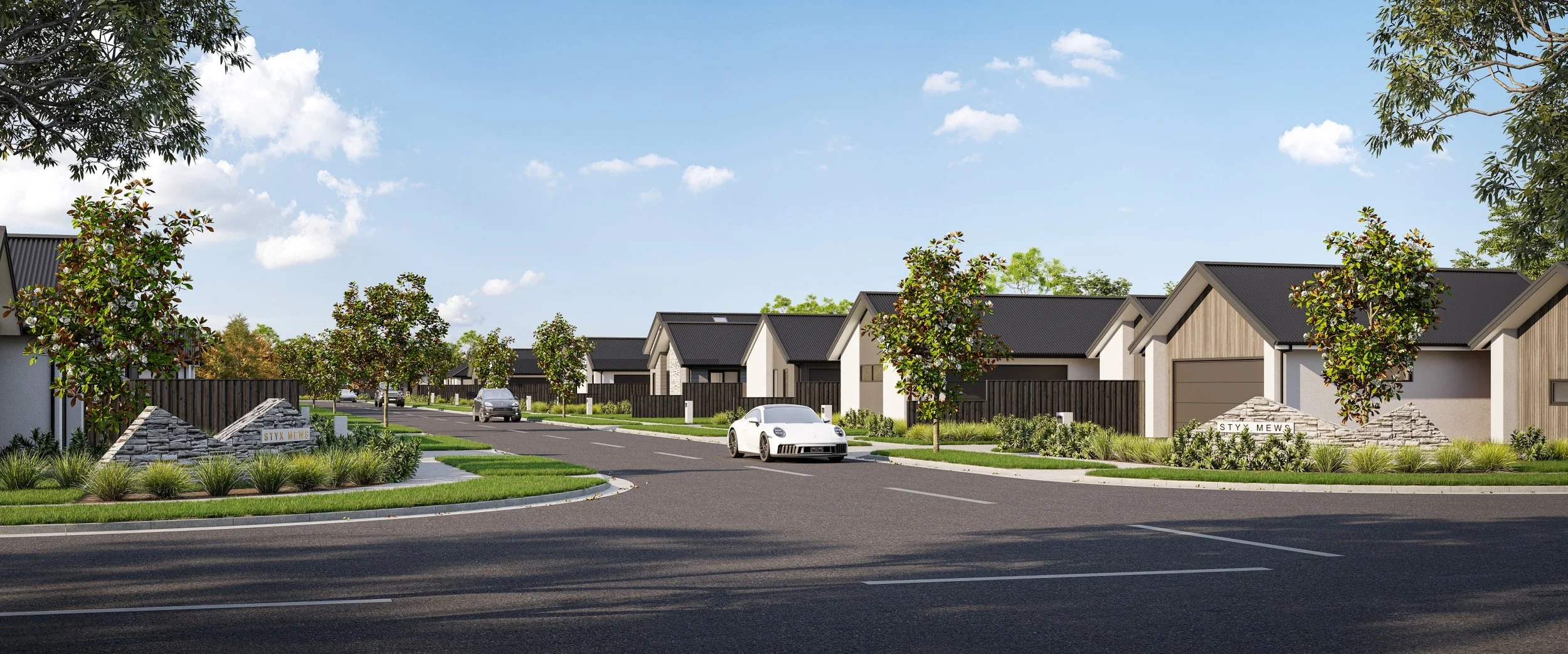
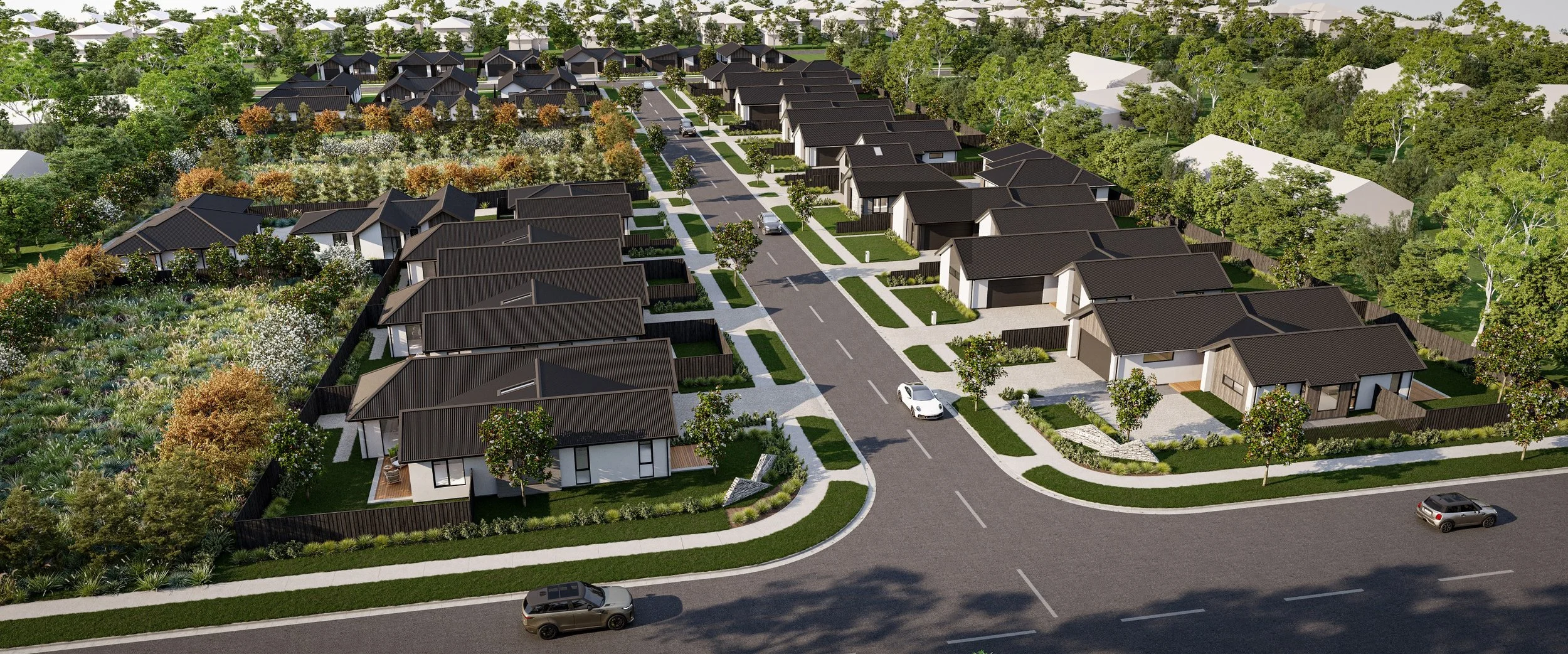
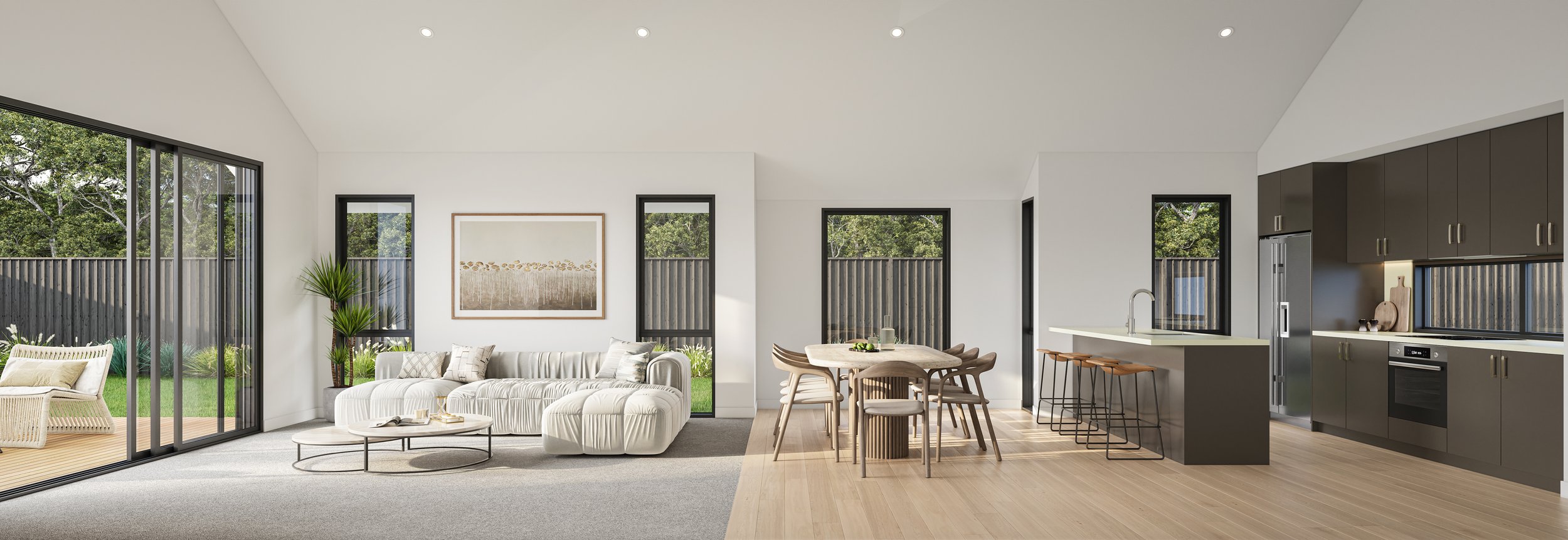
We scoped three deliverables to do the job. A street view hero down the main road through Styx Mews, the shot that sells the feel of living there. An aerial site perspective to show the full subdivision and the scale of what is being built. And a multi-space interior of the Lot 1 home, so buyers could picture the inside, not just the street. Our team of real artists built the renders from the plans, matched to the design of each home.
What We Produced
The street view is the one that does the heavy lifting. It puts you at eye level on the road into Styx Mews, with the stone entry walls and signage framing the way in. The homes run down the street with their gabled black roofs, timber and stucco fronts and tidy front gardens, trees already in leaf along the verge.
It reads as a real street you could move into next week, which is exactly what a sign board needs to do. The aerial pulls right back and shows the whole subdivision from above. You can see how the homes sit along the street, the layout, the green space, the way the neighbourhood holds together.
For a buyer trying to understand a development this size, one good aerial says more than a page of floor plans. Inside, the Lot 1 render takes you into the open-plan living, dining, and kitchen. Vaulted ceiling, warm timber floors, soft whites against a dark kitchen, and big sliding doors out to the courtyard pulling light through the space. It is the shot that turns a streetscape into a home, the moment a buyer starts imagining their own furniture in the room.
Why This Matters for Developers:
There is a real decision sitting underneath this project, and a lot of developers are facing it right now. AI renders are tempting because they are fast and cheap, and for some jobs they are fine.
The problem is that off-the-plan marketing lives or dies on whether a buyer can trust what they are looking at. The renders are doing the selling months before there is a finished home to walk through. On a big subdivision, the stakes go up. You are not selling one house; you are selling a neighbourhood, and the images have to hold together across every lot and stand up blown up on a sign board on the main road. That is where AI tends to fall over.
The cost of a render that does not quite convince is not the render, it is the weeks of slow enquiries while the campaign warms up. North Ridge made the call to back proper renders for the hero work, and it is the call that protects the launch. Good visuals are not the expensive part of development.
Want to see what your development looks like before it's built?
We work with developers, architects, and builders across New Zealand and Australia. Send us your plans and we'll come back with a fee proposal within 24 hours.
