
Appledore Street: Listed two townhouses separately, before either one was built
DP Homes is a Christchurch builder we have worked with for years, and they came to us with a familiar situation. Two new townhouses going up on one site at Appledore Street in Prebbleton, and both being sold separately. The build was still in progress, but the selling could not wait for it. They needed buyers to picture each home, on its own, well before the cladding went on. This is where a lot of developers and builders sit right now. Sites are committed, finance is ticking, and the market wants to see the finished product months before it exists. Selling off the plans is no longer a nice-to-have; it is how most multi-unit projects get away. The job is to close the gap between a construction site and a listing a buyer can fall for.
The Brief
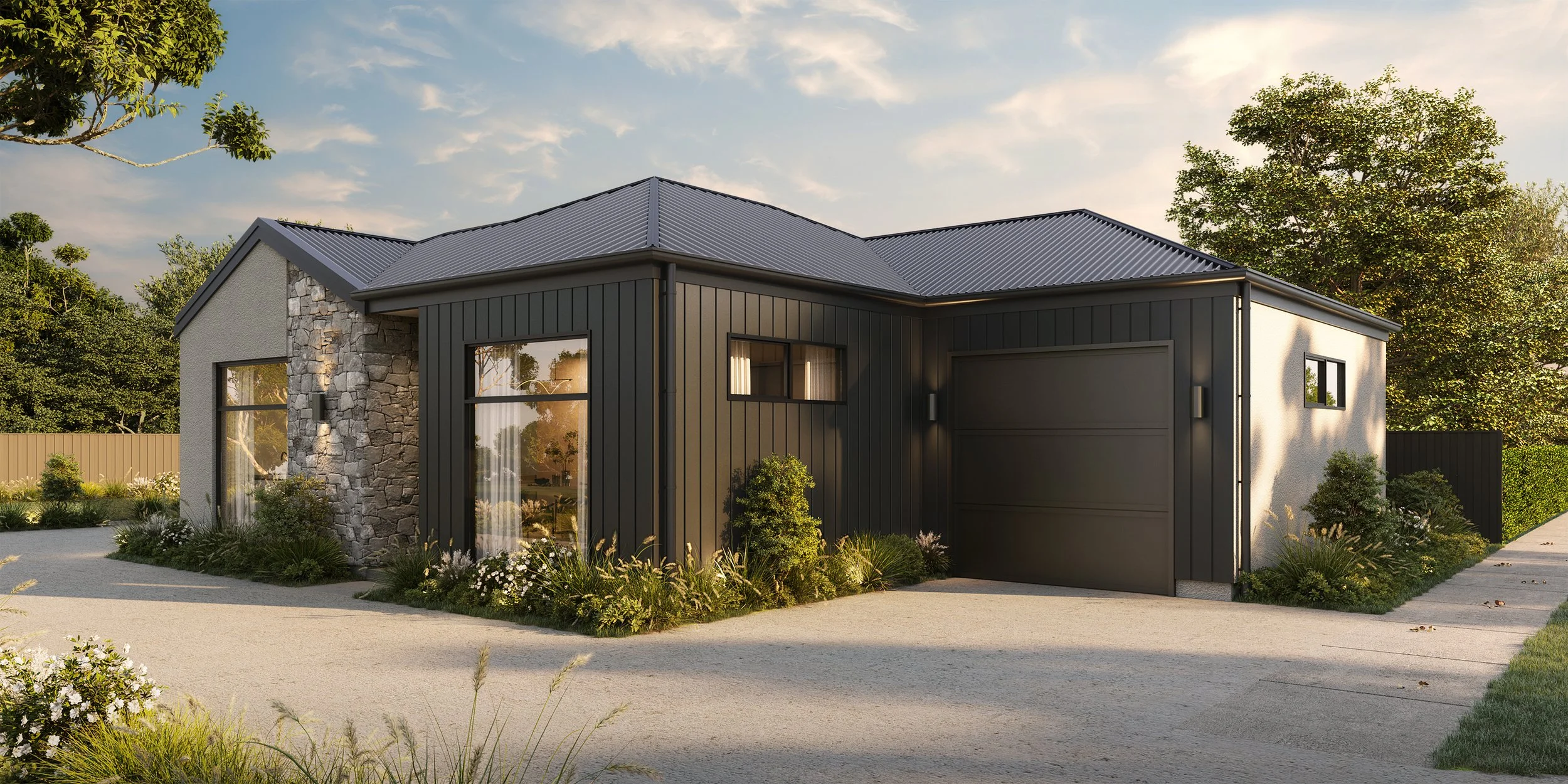
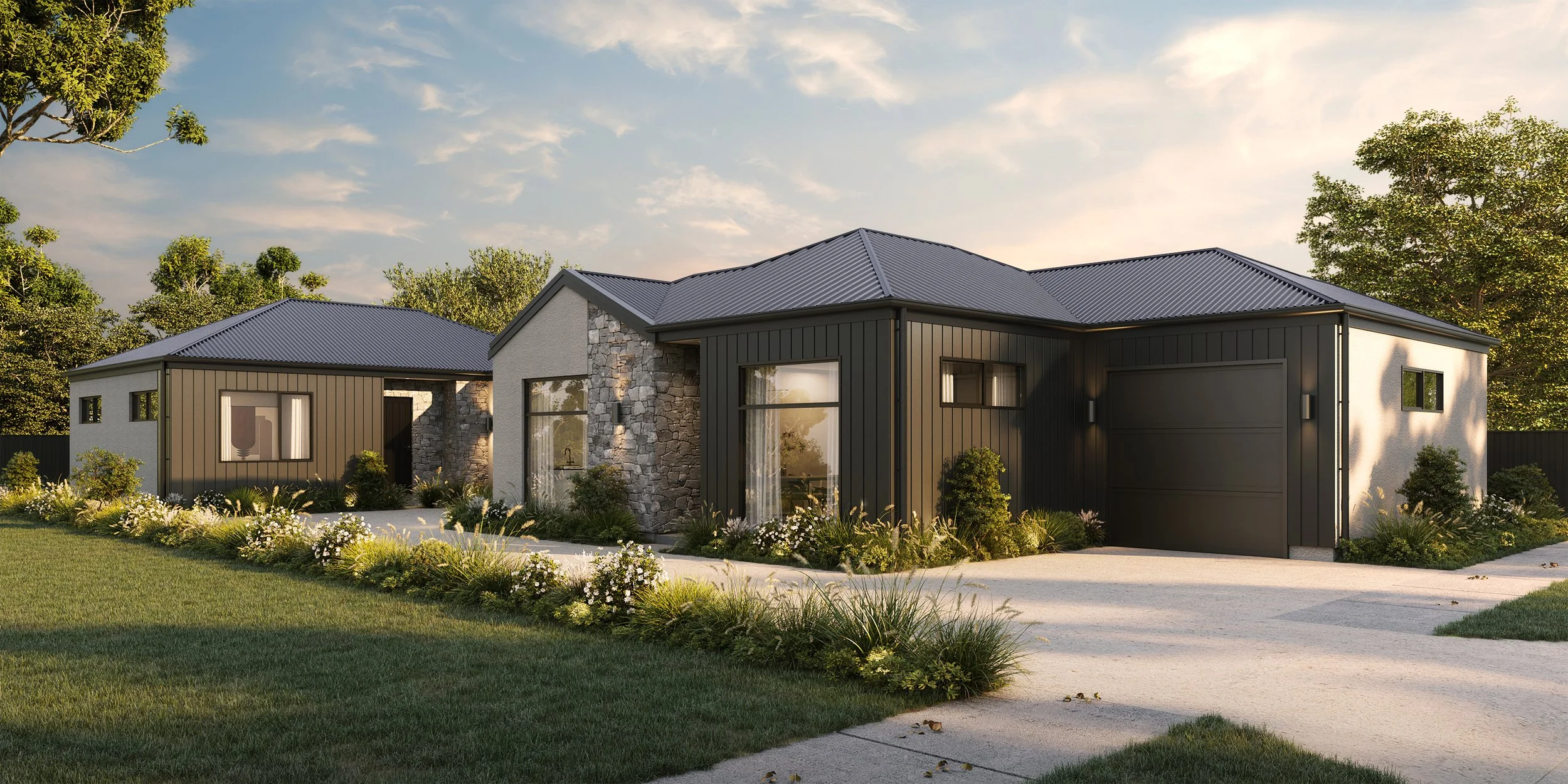
DP Homes needed two renders that could carry the marketing for both townhouses. One ground-level view of the front home from the driveway side, and one higher, wider view that took in the whole site, so the second home read clearly too. Because the two units were being sold separately, each angle had to do real work: show a buyer the home they would actually own, not just a pretty streetscape. The look had to be unmistakably New Zealand. Dark vertical cladding, a charcoal metal roof, a schist stone feature wall, large aluminium joinery, and native grasses through the planting. DP Homes asked for twilight lighting to give the images warmth and lift, the kind of frame that makes a house and land package feel like a home rather than a spec sheet. The reference they pointed us to was a Bayleys listing in Lincoln, so the bar was set: photo real, life-like, and true to how these homes are actually built here.
What We Produced
The cover render is the one that does the heavy lifting. It is a ground-level corner of the front townhouse, shot close enough that you can read the materials. The schist stone wraps the entry, the dark board cladding runs clean and vertical, and the glazing pulls the eye straight into the home. The planting is soft and local, the driveway is exposed aggregate, and the whole frame sits under a warm, low sky. For a buyer, this is the moment the home stops being a plan and starts being a place they could live.
The second render steps back to street level and takes in both homes at once. You can see how the two townhouses sit on the site, how they relate to each other, and how the front and rear units each get their own presence. This is the frame that answers the practical question every off-the-plan buyer asks: what am I actually buying, and what is next door.
Together the two images give DP Homes a hero shot for each listing and a context shot that makes the whole development make sense.
How the Project Ran
The project moved through our standard process, with a bit more refinement than usual because the client knows exactly what good looks like. We started with clay renders so DP Homes could lock in the angles before any detail work began. They were sent a set of clay options in early March, and they chose views one and four, the two that showed each unit best. From there, it went to draft renders. The first round came back with one small note, lighten the garage doors so they clearly read as garages, which we turned around quickly. The improved renders were approved on 25 March and the final high resolution files, 6K at 300dpi, were delivered on 26 March.
Why This Matters for Developers
Most developers do not lose deals because the homes are not good. They lose time because buyers cannot see the homes until they are finished, and time is the most expensive thing on a development. Every week a unit sits unsold is a week of holding costs against a finished build that has not earned its keep yet. Renders close that gap. They let you take a site to market while it is still a frame, run a real campaign, and put a believable picture of each home in front of a buyer months ahead of completion. On a project like Appledore Street, where two homes are sold separately, that means two campaigns can run in parallel instead of waiting on the build. The renders are not the marketing budget, they are what lets the marketing start early. For a builder carrying the cost of construction, starting the selling early is usually the cheapest move on the board. Want to see what your development looks like before it's built? We work with developers, architects, and builders across New Zealand and Australia. Send us your plans and we'll come back with a fee proposal within 24 hours.
